Roman Brooch Collection

£2.00

Eastern European Roman Brooch Collection (1st–3rd Century AD)
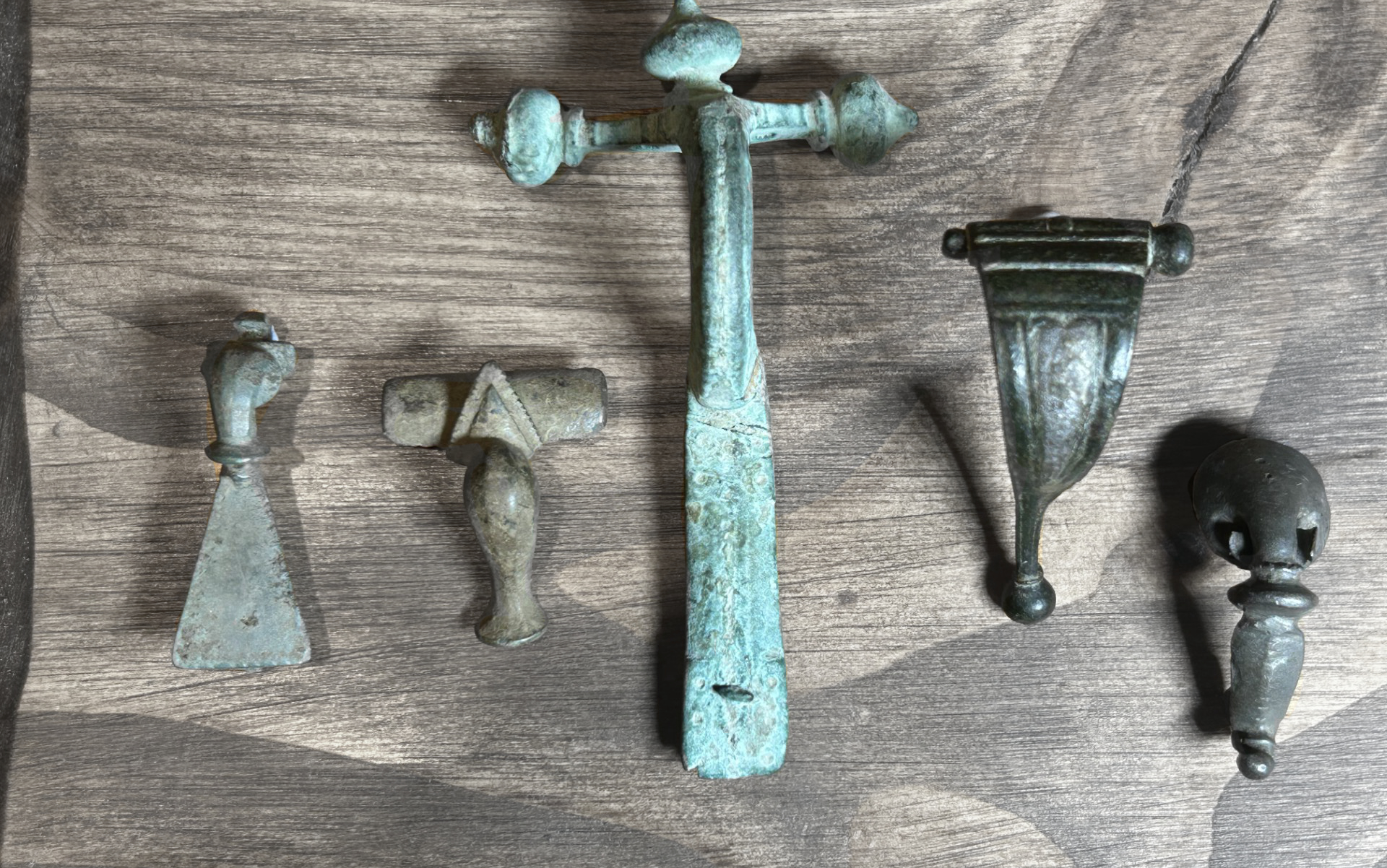
This fine assemblage of Roman fibulae (brooches) represents the diverse range of provincial styles found across Eastern Europe during the height of the Empire. These brooches served both a functional and decorative purpose—fastening garments while displaying personal taste and regional identity.

The examples shown include crossbow, knee, and dragonesque forms, each cast in bronze and exhibiting varying degrees of patina from centuries of burial. The crossbow fibula, distinguished by its prominent bulbous knobs and sturdy bow, became characteristic of late Roman military attire. In contrast, the knee brooch, with its distinctive forward-curving head, is typical of Dacian and Pannonian provinces, often worn by soldiers and officials stationed along the Danube frontier. Smaller decorative variants reflect local adaptations, merging Roman craftsmanship with native design influences.

Together, these brooches illustrate the cultural fusion and practical artistry of the Roman frontier — a region where imperial fashion met local tradition in metalwork that remains both utilitarian and beautiful nearly two millennia later.

PLEASE NOTE: IF YOU WANT TO PAY WITH A CARD, CLICK THE BLUE ‘PARTICIPATE’ BUTTON AND YOUR TICKETS WILL BE IN YOUR CART, THEN PROCEED TO CHECKOUT

No Purchase Necessary. For free postal entry, see our Terms and Conditions….

Started

Total tickets for this prize: 150

Number of winners for this prize: 1

Tickets sold: 0

0 Tickets remaining: 150 150 0

Choose your answer *

Which Eastern European country is currently at war with Russia
  • Ukraine
  • Malaysia
  • Brazil
Category:

Rome’s Conquest of Eastern Europe
Rome’s expansion into Eastern Europe was a gradual and often brutal process that spanned more than three centuries. Beginning in the 2nd century BC, Roman legions pushed steadily north and east from the Adriatic, subduing Illyrian and Thracian tribes before advancing into the Balkans and beyond. The decisive campaigns of Emperor Trajan (AD 101–106) brought the rich kingdom of Dacia—roughly modern Romania—under imperial control, opening access to its vast gold mines and securing the Danube frontier.

The region became a mosaic of fortified military zones, Roman colonies, and trading outposts linked by an expanding network of roads and forts. Latin culture, architecture, and administration took root, blending with local traditions to create a distinctive Romano-provincial identity. Yet the area remained a restless borderland, exposed to constant pressure from migrating peoples beyond the frontier.

By the 4th century AD, as imperial power waned, the Danube provinces stood as Rome’s outermost bulwark against barbarian incursions—a testament to both the Empire’s reach and its vulnerability.

Scroll to Top